Link Blog

11 collections · 1523 total posts

March 2022

22-03-2022
The Ultimate Guide to Real-Time Lane Detection Using OpenCV – Automatic Addison

The Ultimate Guide to Real-Time Lane Detection Using OpenCV – Automatic Addison

Source: automaticaddison.com

In this tutorial, we will go through the entire process, step by step, of how to detect lanes on a road in real time using the OpenCV computer vision library and Python. By the end of this tutorial, you will know how to build (from scratch) an application that can automatically detect lanes in a video stream from a front-facing camera mounted on a car. You’ll be able to generate this video below.

18-03-2022
Calibrating a Monocular Camera with ROS - Robotics with ROS

Calibrating a Monocular Camera with ROS - Robotics with ROS

Source: ros-developer.com

ROS use OpenCV for camera calibration but the format that it stores the data is different than OpenCV. Also, you need to know where to place the camera calibration files so ROS can find it and publish it. 1.First, you need to install usb cam package from ROS and uvcdynctrl to disable autofocus: sudo apt-get install ros-kinetic-usb-cam uvcdynctrl 2.Open … Calibrating a Monocular Camera with ROS Read More »

18-03-2022
Fiducial-Based Localization

Fiducial-Based Localization

Source: learn.ubiquityrobotics.com

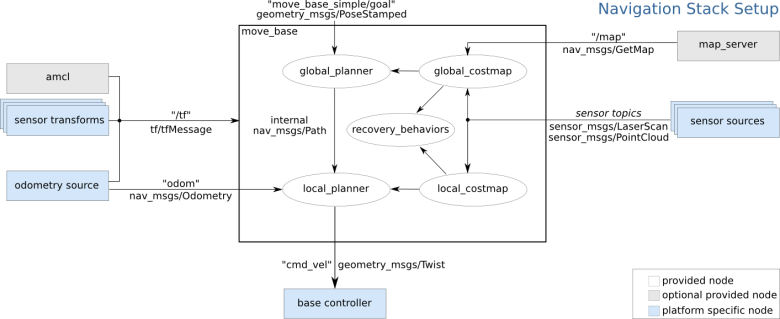
Tutorials for MagniThis document discusses running our fiducial based navigation software on a Ubiquity Robotics robot base, using the supported Raspberry Pi camera. It also assumes that you have a workstation with ROS installed, which is connected to a network in common with the robot. You will need a printer, too.

18-03-2022
OpenCV: Detection of ArUco Markers

OpenCV: Detection of ArUco Markers

Source: docs.opencv.org

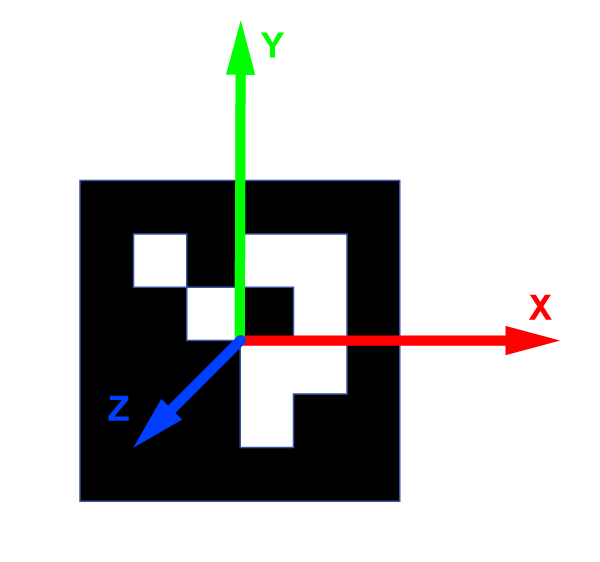
Pose estimation is of great importance in many computer vision applications: robot navigation, augmented reality, and many more. This process is based on finding correspondences between points in the real environment and their 2d image projection. This is usually a difficult step, and thus it is common to use synthetic or fiducial markers to make it easier.